
Written by:

Grant Yuill
Head of Marketing & Customer Engagement
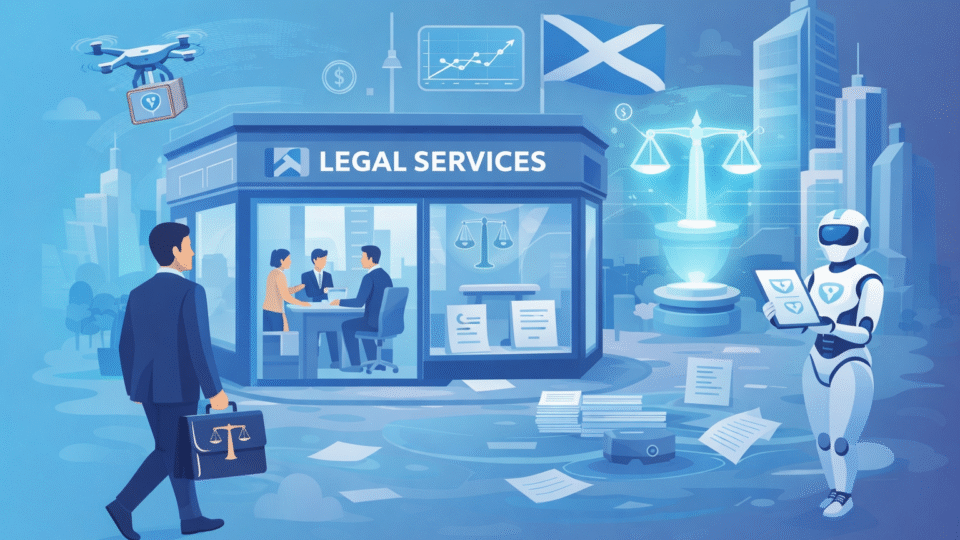
Legal departments and compliance teams in Scotland are heading into one of the most technology-driven periods in history. Artificial intelligence, advanced automation, and rapidly evolving regulatory requirements are converging, pushing organisations to adapt quickly or risk falling behind. Recent industry research suggests that AI will fundamentally reshape professional work over the next few years, with many leaders seeing these developments as a major driver of positive change.
Here are the legal tech trends that will have the greatest impact on the industry, in our opinion here at Denovo, of course.
1. The Rise of AI Agents as Legal Assistants
AI agents mark a turning point in how digital assistants support professional work. Unlike earlier tools that simply retrieved information or generated responses, AI agents can operate independently and carry out tasks with a clear objective. As routine work is increasingly automated, human teams gain the freedom to concentrate on complex, people-focused activities that deliver genuine value and cannot be easily replaced by machines.
2. AI as a Strategic Business Partner
AI is now a central tool in making data-driven business decisions. By predicting risk, assessing regulatory impacts, and analysing market trends, AI enables organisations to uncover new opportunities for efficiency and growth. Legal professionals are increasingly leveraging this technology not just for automation but to develop innovative business models, including subscription-based AI services and data-driven solutions for clients.
3. Smarter Court and Administrative Processes
Many court systems struggle with heavy caseloads and limited staffing, leading to ongoing delays in legal proceedings. AI and automation are increasingly being used to handle administrative tasks, including scheduling, creating customised summaries and court documents, and identifying potential sources of delays.
4. Real-Time Regulation Monitoring
Regulatory technology is developing rapidly. Today’s platforms can continuously track legislative changes and notify organisations when updates affect their operations. Many systems also offer automated compliance reporting and can handle routine regulatory tasks, enabling businesses to react promptly to legal changes and minimise the risk of non-compliance and penalties.
5. Cybersecurity at the Heart of Legal Technology
Cybersecurity is no longer only an IT issue; it has become a critical concern for legal and compliance teams, particularly for organisations handling sensitive client data. High profile cyber attacks were common news in 2025 with numerous firms having already experienced security breaches, highlighting the importance of strong safeguards and clear internal processes. In 2026, cybersecurity is likely to be embedded directly into legal technology systems, rather than treated as an additional layer.
Any oversight in failing to prioritise security can lead to financial loss and long-lasting reputational damage.
6. Predictive Case Outcomes
AI-powered predictive analytics are becoming more advanced, enabling organisations to evaluate the probability of various legal outcomes, estimate associated costs, and make informed decisions on whether to proceed with litigation or pursue early settlement. By delivering actionable, data-driven insights, these tools help legal services manage risk efficiently and allocate resources where they will have the greatest impact.
7. Compliance Built into Everyday Business Systems
Today, compliance features are “bolted on” to software that can do everything from marketing automation to HR to AI-powered account reconciliation. Legal and compliance professionals will not have to do as much physical and repetitive work, but they will still need to keep an eye on things because approvals could otherwise be done by employees who are not lawyers. In 2026, auditing the operation of compliance processes within these broad, end-to-end platforms is expected to become a growing responsibility for legal and compliance teams.
How Denovo Can Support These Changes
As legal technology advances, it is crucial to have the proper systems and support in place. Denovo provides a comprehensive suite of legal software and services designed to help firms and in-house teams stay ahead by adapting confidently to these emerging trends.
Denovo offers cloud-based case management, integrated legal accounting, outsourced cashroom services, and AI-powered research tools to help organisations streamline workflows, enhance compliance, and boost operational efficiency. Their solutions are built to grow with your business, providing flexibility, security, and expert support as regulatory and technological demands evolve.
By combining advanced new technology with practical legal expertise, Denovo enables legal teams to transform workflows, allowing them to focus on delivering value while staying compliant and future-ready.
Prepare for the Future of Legal Technology
If you are looking to harness the power of modern legal technology, Denovo is here to support you. Speak to the team today to explore solutions designed for your organisation and take the next step toward a smarter, more efficient legal workflow.
Get in touch with Denovo to book a consultation or request a demo today.